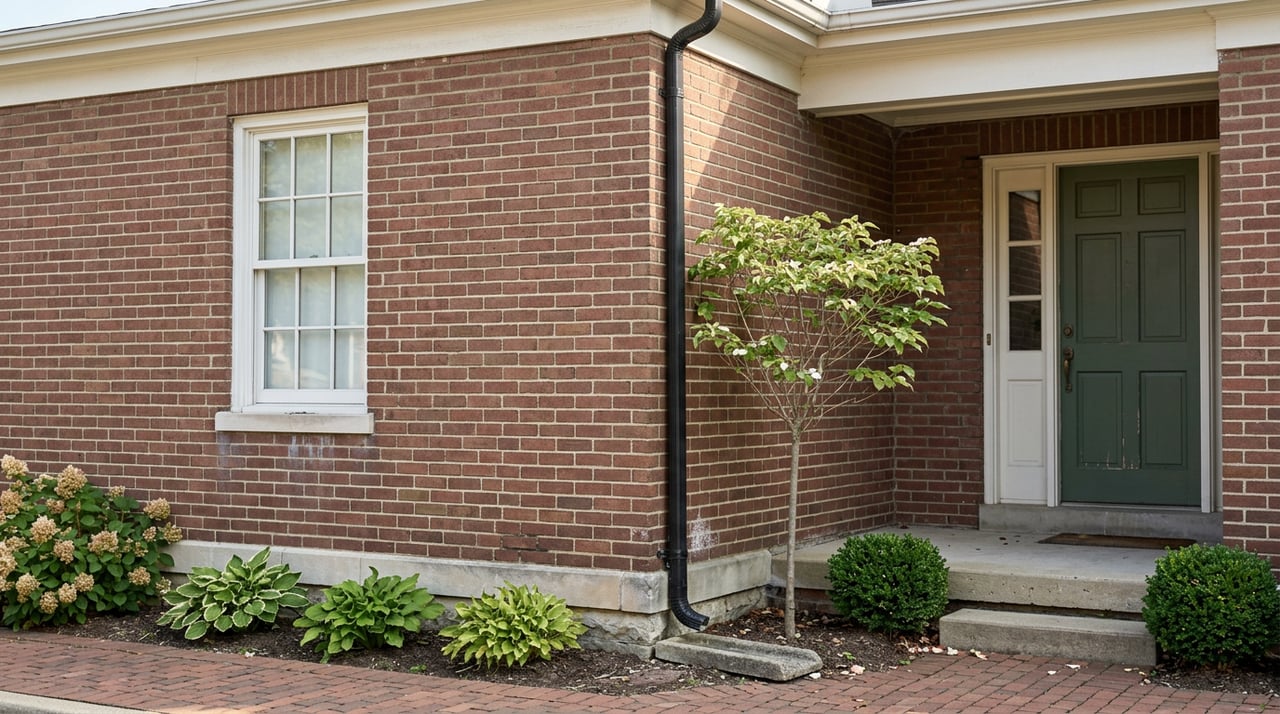
Pull up two listings on a Tuesday night. A three-bedroom ranch in Seymour asking $205,000. A comparable three-bedroom in Columbus asking $265,000. Same beds, same baths, same era. The portals tell you Seymour is cheaper. They do not tell you why, and they definitely do not tell you what changed in Seymour this April.
If you are shift-working at Cummins, Aisin, Walmart Transportation, or Schneck Medical Center and trying to decide which side of the I-65 corridor to plant on, the median is the wrong number to lean on. Here is a more useful frame.
The thesis, up front
The gap between Seymour and Columbus is not a discount for a lesser town. It is a footprint premium that Columbus buyers pay for proximity to Cummins headquarters and a deeper move-up inventory. Meanwhile, Seymour's wage floor, the thing that actually supports Seymour housing demand, was just re-anchored in April 2026 by an industrial abatement package that most listing sites never surface. Read the price gap through that lens and the two cities look less like tiers on a ladder and more like two different trades.
The numbers, side by side
| Metric | Seymour | Columbus |
|---|---|---|
| Median sale price (most recent 3-month window) | ~$197,000 | ~$256,000 (Feb 2026) |
| Median price per square foot | ~$142 | ~$132 |
| Median days on market | ~53 | ~50 |
| Typical sale vs. list | ~2–4% below list | ~2–4% below list |
Two things jump out that the price-only story misses.
First, Seymour's price per square foot is actually higher than Columbus's in the most recent Redfin cut. That inverts the usual "small town = cheaper everything" assumption. Columbus has more $400K-plus inventory pulling its price-per-foot average down against a bigger denominator; Seymour's stock is more uniformly modest and prices tighter per square foot.
Second, days on market are almost identical. Seymour is not a slower market than Columbus in 2026. It is a smaller one moving at the same pace.
What the ~$60K gap actually buys in Columbus
When a buyer pays the Columbus premium over an equivalent Seymour house, they are typically buying four things:
- Proximity to Cummins headquarters and the downtown employment cluster. Cummins is headquartered in Columbus and lists dozens of engineering, IT, and supply chain roles there that do not exist at the Seymour engine plant.
- A deeper move-up inventory. Columbus has more three- and four-bedroom homes in the $300K–$500K band, which matters if you plan to trade up in five to seven years without leaving town.
- The Bartholomew Consolidated school-district footprint and its associated family-oriented subdivisions.
- Access to the architecture, dining, and civic amenities that Columbus is known for regionally.
That is a real bundle. It is not, however, "a nicer version of Seymour." It is a different product.
What the same money buys in Seymour
Run the trade the other direction. The $60K you keep by buying in Seymour instead of Columbus is not just left in your pocket. It buys you into a specific market:
- More square footage and lot at the same monthly payment. Seymour's housing stock leans toward post-war ranches and bungalows on tree-shaded lots closer to the center, with newer subdivisions ringing the edges of town.
- A shorter commute to the plants themselves. If you work at the Seymour Engine Plant, the Aisin campuses, or the Walmart Distribution Center, living in Seymour turns a 25-minute I-65 slog into a five-to-ten-minute drive.
- Downtown Seymour, which still has an intact commercial core. Brick storefronts around the tracks, Seymour Main Street's active grants and events program, the Scarecrow Stroll in October, Oktoberfest each fall, Shields Park close in.
- Access to Muscatatuck National Wildlife Refuge and Freeman Field's ballfields and trails on the old wartime airfield grounds.
The buyer who values footprint and proximity-to-work over Cummins-HQ proximity is not settling. They are making a different trade with the same dollars.
The hidden mechanism: April 2026 changed Seymour's wage floor
This is the piece almost no comparison guide mentions.
In April 2026, the Seymour Common Council approved property-tax abatements supporting more than $164 million in new capital investment by five of the city's largest industrial employers: Valeo, Aisin USA, the Cummins Seymour Engine Plant, the Walmart Distribution Center, and SpaceGuard Products. The abatements were tied to the retention of more than 3,700 jobs, including 1,831 at Aisin's two Seymour plants, 957 at Cummins, and 937 at the Walmart Distribution Center.
Why should a homebuyer care about a council tax vote?
Because housing demand in a manufacturing town is not driven by the median list price. It is driven by whether the plants stay. A $164M capex commitment, largely in new manufacturing equipment and automation, is a fifteen-to-twenty-year signal. Aisin already grew from roughly 200 projected jobs at its 1989 opening to more than 2,000 by 2020. Cummins has invested more than $350 million in its Seymour high-horsepower operations over the past decade, nearly doubling employment there. That April 2026 vote extends that trajectory, and it did so at the same moment statewide inventory was climbing and median listing prices were softening. Aaron Luttrull's mid-July 2026 halftime column noted that Indiana's median listing price had been steady since February and had fallen below 2025 heading into July, with nearly 45% of homes on the market statewide in June having dropped their price at least once.
Translation: statewide, sellers are giving ground. Locally, the demand floor in Seymour just got reinforced. That combination is the actual case for buying Seymour right now, and it is invisible on any national portal.
Commute economics, honestly
The classic move for a Cummins engineer is to live in Columbus. The classic move for a Cummins production associate on the Seymour side is to live in Seymour. Both are rational. What is worth doing is the math on the middle case.
Round trip Columbus-to-Seymour on I-65 runs roughly 40 miles a day for a Seymour plant worker who lives in Columbus. At the current IRS mileage rate and a five-day schedule, that is real money against the ~$60K price gap. Over a five-year hold, the commute cost alone can offset a meaningful slice of the Columbus premium. The offset is not the whole story, but if you were planning to buy in Columbus purely to avoid "settling" for Seymour, run the numbers before you sign.
The reverse case, living in Seymour and commuting to Columbus for Cummins HQ, is also common and totally viable, especially for shift workers who are on I-65 before Columbus traffic thickens.
Transaction friction that catches Seymour buyers off guard
A few Seymour-specific patterns worth knowing before you write an offer:
Older housing stock means older systems. Much of Seymour's inventory is post-war ranch or bungalow. Sewer laterals, original electrical panels, and knob-and-tube remnants show up in inspection reports more often here than in a Columbus subdivision built in the 2000s. Budget for a sewer scope, not just a standard inspection.
Flood-plain overlap around the East Fork White River. Seymour has FEMA-regulated flood-plain areas, and the city's planning office enforces those regulations for construction and renovation. If a listing sits near the river, confirm the flood zone before you get emotionally attached; the answer changes both your insurance quote and your lender's requirements.
Well and septic on the annexation edges. Seymour has been actively annexing land for future residential and industrial growth. Properties on the current edge of the city may still be on well and septic rather than city sewer, which is a different underwriting picture. The Seymour Planning & Zoning office can confirm sewer-tap availability for a specific parcel.
Appraisal comps are thin in some pockets. Because Seymour's inventory leans older and modest, a newly renovated home can outrun its neighborhood comps. That is fixable, but a listing agent needs to prepare the appraisal packet before the appointment, not after a low number comes back.
FAQ
Is Seymour "cheaper than Columbus" the right way to think about it? Not really. Seymour's median price is lower, but its price per square foot is currently a touch higher than Columbus's in the most recent Redfin windows. The right frame is different product, similar pace, different employer bundle.
Did the April 2026 abatement package actually change anything for buyers? Directly, no. Your closing costs are the same. Indirectly, yes. A $164M+ industrial capex commitment tied to 3,700+ retained jobs is the strongest signal a buyer can get that the wage base supporting local demand is sticking around.
Which town has more new construction? Columbus, on balance. Seymour's inventory is dominated by existing homes, with newer subdivisions on the outer edges. If new construction is a hard requirement, the search tilts toward Columbus and the outskirts of Seymour rather than the historic core.
When is the best window to shop either town? Statewide seasonality favors buyers after August, with inventory typically peaking in October or November and sellers accepting less of original list price. That pattern applies to both Columbus and Seymour.
Deciding between Seymour and Columbus is not a tier decision. It is a trade decision, and the right answer depends on where your paycheck comes from, how far you are willing to drive, and what you want the next five years of your housing life to look like. If you want that trade run against your actual budget, employer, and timeline, The Nolting Team works both sides of the I-65 corridor every week. Start with a home valuation and a conversation, and we will build the comparison around your numbers, not a portal's.