"Hillenbrand is well-positioned to drive growth and innovation with our investment in the business."
— Donald Quintin, as quoted by WOWO
He said it on February 10, 2026, the day his firm officially took Batesville's largest public company off the stock market for good. Hillenbrand had been headquartered on the same road in the same small city since before Batesville had a zip code. For anyone who doesn't track industrial manufacturing stocks, that sentence was probably the first sign anything had changed at all.
If you're weighing a move to Batesville and did even a little digging, you may have stumbled on this news and wondered what a $3.8 billion buyout means for the town you're about to bet a mortgage on. Losing a hometown's public company is usually not a great sign for a small city's economic footing. Except in Batesville's case, the part of the story that actually explains the housing market happened three years earlier, in a much quieter transaction almost nobody outside southeastern Indiana noticed at the time.
The Deal That Made Headlines
Lone Star Funds, a Dallas-based private equity firm, paid $32 a share for Hillenbrand in an all-cash transaction worth about $3.8 billion. Shareholders approved the sale in early January 2026, and it closed about a month later. Hillenbrand now operates as a private company under its own name, still engineering the processing and molding equipment that ships to plastics, food and automotive customers around the world, still headquartered in the same building it's occupied for decades.
For a city of about 7,000 people, watching your largest public employer get bought by a Texas private equity shop and delisted from the New York Stock Exchange sounds like exactly the kind of event that should ripple through local housing data. It didn't. Understanding why matters if you're trying to figure out whether this market is genuinely stable or just been lucky so far.
The Split Nobody Was Watching
Three years before Lone Star showed up, Hillenbrand had already made the decision that mattered more for Batesville's economic footing. In 2023, it sold Batesville Casket Company, the business that carried the Hillenbrand name into funeral homes across North America since 1906, to a private investment firm called LongRange Capital for $761.5 million. The casket operation didn't relocate and didn't shed its local workforce. It became Batesville Services LLC, kept its headquarters, its manufacturing plant and its distribution network exactly where they'd always been, and by 2026 it had landed on Newsweek's Most Trustworthy Companies list for the third year in a row.
There's a third data point that rounds out the picture. Hill-Rom, the hospital bed business that used to sit under the same corporate roof, split off in 2008 and moved its headquarters to Chicago in 2015, then was later acquired by Baxter International. Even after the decision-makers left town, Baxter has continued to run more than 900 jobs out of the original Batesville plant. The people writing paychecks moved to Illinois. The paychecks themselves stayed local.
Line those three outcomes up and the pattern becomes obvious. A corporate sale, a headquarters relocation and a stock delisting all happened to companies tied to Batesville over the past two decades, and in every single case the manufacturing jobs stayed put. That's the variable that actually predicts what happens to housing demand in a company town. Not whether a name disappears from a stock ticker, but whether the building keeps running.
What the Listings Are Actually Saying
None of this shows up as a blip in the numbers, because there wasn't one to show. As of July 2026, homes listed for sale in Batesville carried a median asking price around $389,000, spending a median of 49 days on the market before going under contract. Separately, a broader measure of typical home value across the Batesville zip code, last updated this spring, put the figure at $321,741, up 5.9% over the previous year.
That roughly $67,000 gap between the two numbers isn't a market losing its footing. It's a reflection of which homes happen to be for sale at a given moment. A typical-value measure averages in the older ranches and Cape Cods near downtown that haven't traded hands in years. A current-listing median leans toward whatever's actually on the market right now, and in Batesville that skews toward updated and newer-construction homes in subdivisions like Farmington Estates and Hoosier Heights. When newer stock is what's listed, the asking-price median climbs above the town's underlying value even in a market that isn't overheating at all.
Two Different Houses, Built for Two Different Buyers
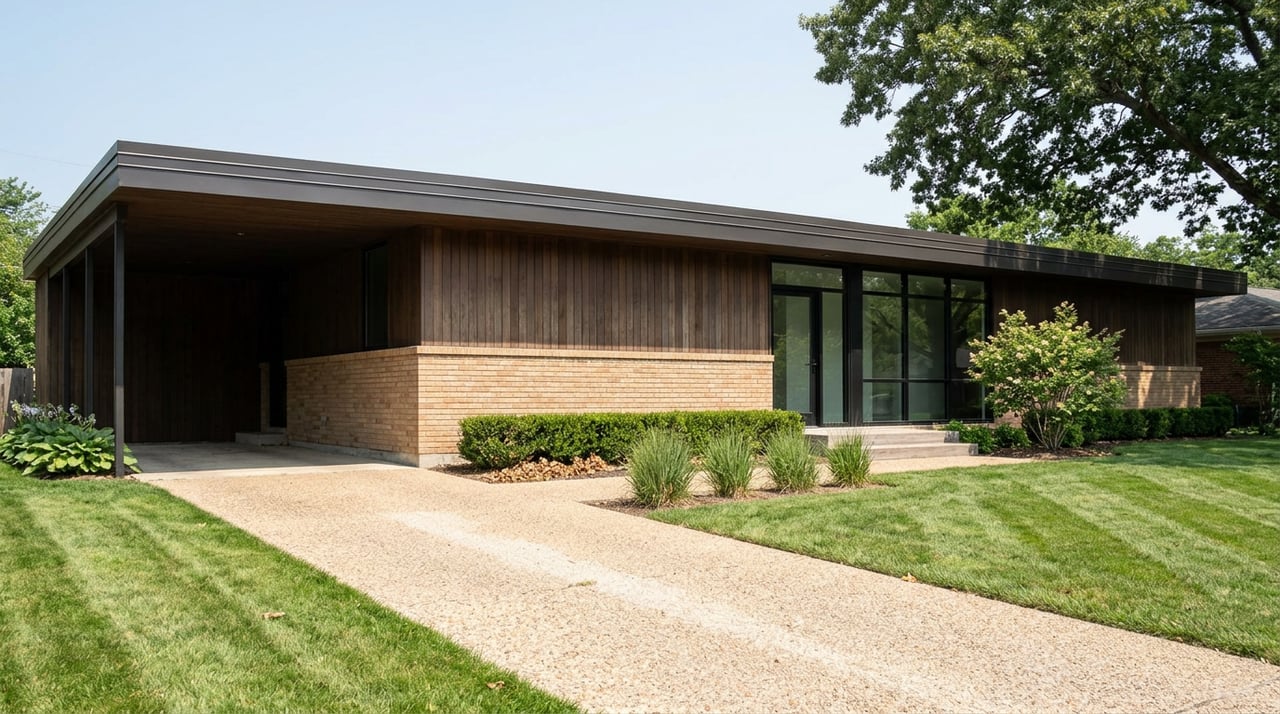
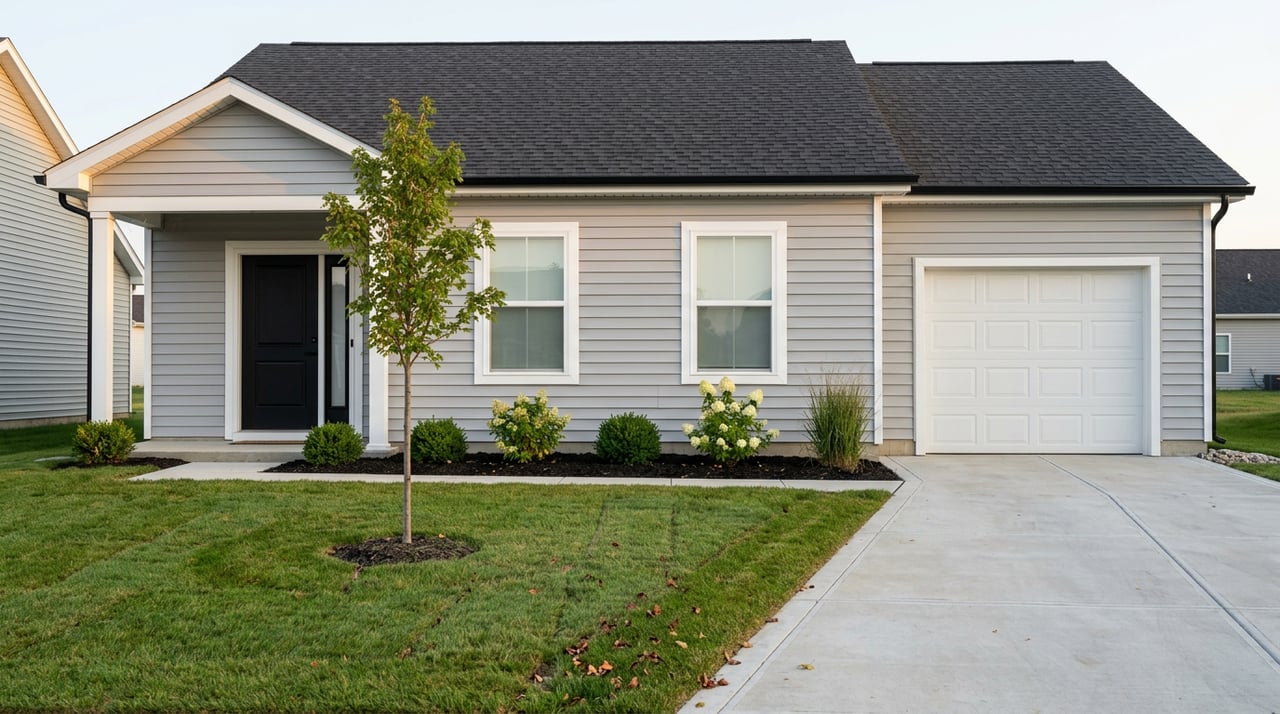
While the corporate ownership drama played out upstream, the construction happening on the ground told a more useful story about where the city thinks its next residents are coming from. Crestview Estates, a subdivision of 78 homes, was built with the help of Indiana's Regional Economic Acceleration and Development Initiative, known as READI, specifically to meet local demand for homes priced at $300,000 and below, with READI funds covering the cost of extending municipal sewer service to the site.
At the same time, a separate proposal called Lakeshore Village called for a much wider range of housing on the southern end of Bischoff Reservoir, from more than 80 "village homes" priced between $250,000 and $350,000 up to 30 "estate homes" starting above $500,000, plus a mix of cottage homes, apartments and duplex lots in between. The project was designed around trail access to downtown and shorter commutes to the area's employers, which only makes sense if the people funding it expected those employers to keep hiring locally for years.
You don't put public dollars into sewer lines for sub-$300,000 starter homes and a reservoir development with half-million-dollar lots in the same town unless you believe both kinds of buyers are actually going to show up. That's a stronger signal about Batesville's economic footing than anything that happened to a stock ticker.
The Roads Tell the Same Story
State agencies don't resurface highways in towns they expect to shrink. State Road 46 was under a milling and asphalt overlay project that ran from early June through mid-August 2026, covering the corridor between State Road 229 and State Road 129. A separate $2.7 million contract awarded to Morphey Construction is putting new sidewalks and pedestrian improvements along State Road 229 between Franklin Street and Six Pine Ranch Road, with completion targeted for November 2026.
Neither project has anything to do with Hillenbrand's ownership structure. Both are the kind of unglamorous infrastructure spending that state and local governments commit to only when they expect the traffic, and the tax base behind it, to still be around.
What This Actually Means If You're Comparing Batesville to Other Towns
The instinct to treat a hometown company's sale as a warning sign makes sense in a lot of small towns, because in a lot of small towns it's the right instinct. Batesville is a case where the diversification already happened quietly, back when Batesville Casket became Batesville Services and kept its plant running under new ownership instead of packing up, and back when Hill-Rom's headquarters left but its jobs didn't follow. Hillenbrand leaving the stock exchange in February was the third act of a story whose earlier chapters already proved the town's job base could survive an ownership change without missing a beat.
If Batesville is on your list next to Columbus, Seymour or one of the other southern Indiana towns you're weighing, the question worth asking isn't whether the company on the water tower still trades on the NYSE. It's whether the subdivisions being built, the roads being repaved and the businesses staying headquartered where they've always been are all pointing the same direction. Right now in Batesville, they are.
A Few Questions Worth Answering Directly
Does the Hillenbrand sale affect property taxes in Batesville?
A change in corporate ownership structure doesn't itself change property tax assessments. Local rates are set by Ripley County and the city, not by whoever owns the industrial company headquartered there.
Are Hillenbrand jobs staying in Batesville?
Hillenbrand continues to operate under its own name from its Batesville headquarters after the sale, and Lone Star's stated plan is to invest in the business's growth rather than relocate it. As with any ownership change, there's no public guarantee tied to future headcount.
Is now a good time to buy in Batesville?
That depends on your situation, your timeline and what you can afford. What the current data shows is a market with steady demand, a median 49-day time on market as of July 2026, and active construction aimed at more than one price point, which is a different question than whether it's the right moment for any one buyer.
If you're trying to figure out what a specific price point actually buys in Batesville right now, or how it stacks up against Columbus, Seymour or Brown County, the The Nolting Team works this market every day and can walk you through it. Get Your Home Value or reach out to talk through your next move.
This article is general information, not legal, tax or financial advice. Consult a qualified professional about your situation.